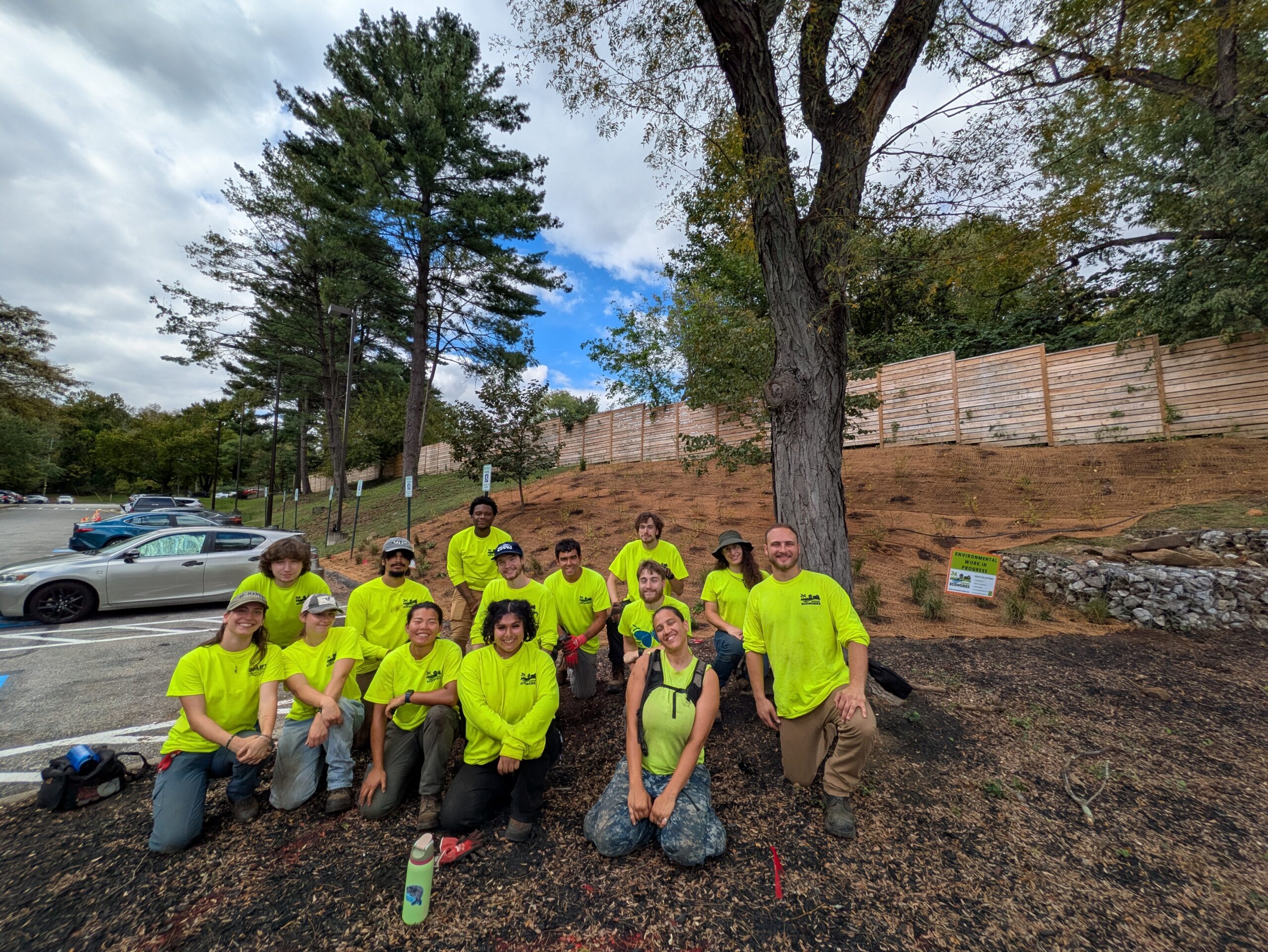
No, the bright colors spotted outside the Mill’s Big Lot entrance the past two weeks weren’t part of the fall monarch migration. But they were playing a small role in it.
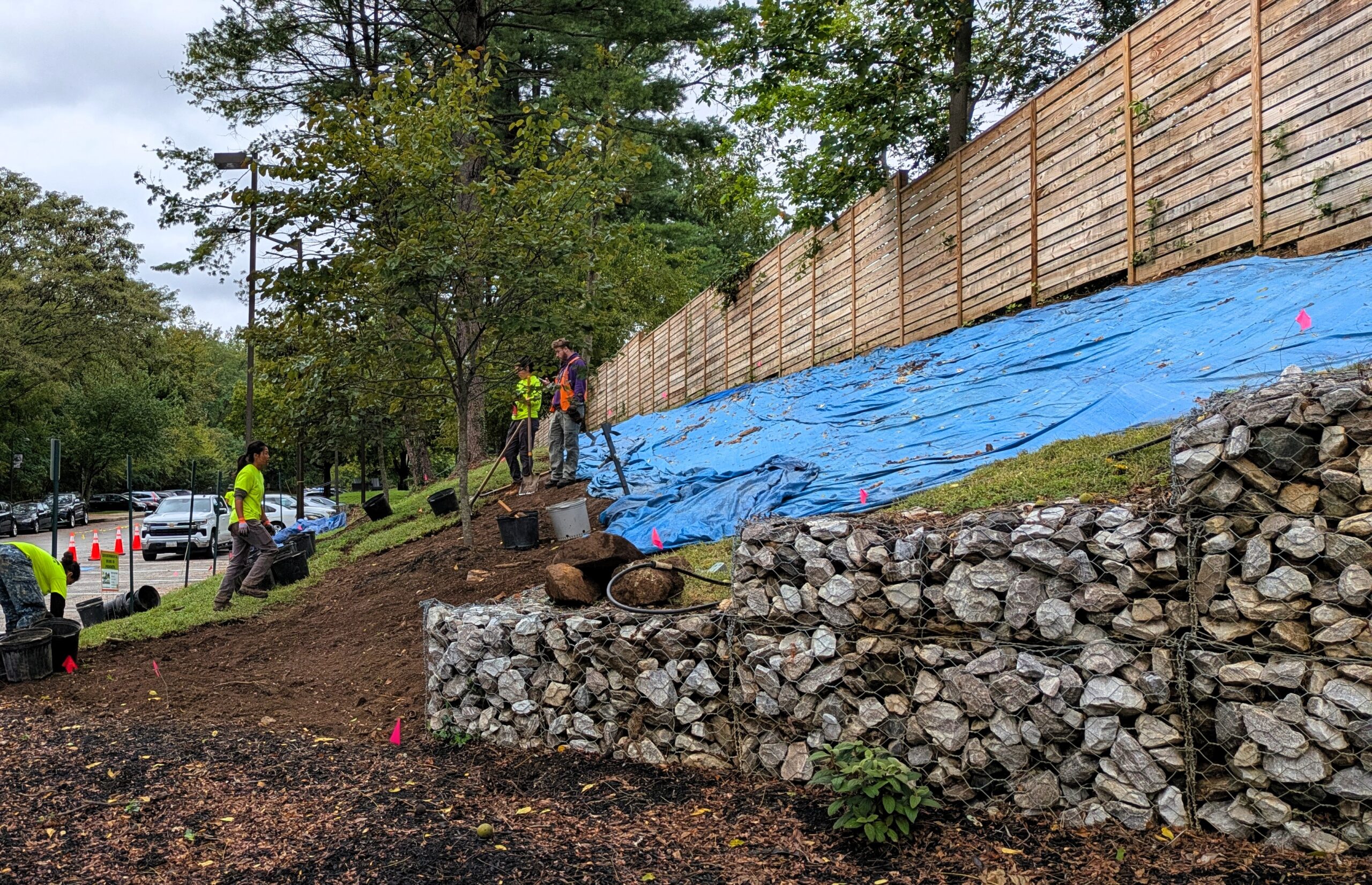
Clad in neon yellow t-shirts, a crew from the nonprofit Howard EcoWorks restored a steep, sunny slope beside the parking lot. The goal: to remove invasive vines and weeds, put down a natural erosion-control mat, and plant sun-loving, drought-tolerant native flowers, bushes, and trees.
Maintaining a healthy ecosystem makes sense for us all. Native insects and birds, including the beloved monarch butterfly, need suitable habitat for sustenance, shelter, and nesting. Plants – trees, bushes, and flowers – that are native to the Mid-Atlantic have developed symbiotic relationships with their insect visitors.
Although we may not think about it often, humans also need insects and birds. Tens of thousands of insect and bird species, including the well-known honeybee, pollinate the food crops that nurture us.
As natural habitats decline due to human-related activities, individuals and businesses play an important part in helping create islands that sustain our insect and bird friends.
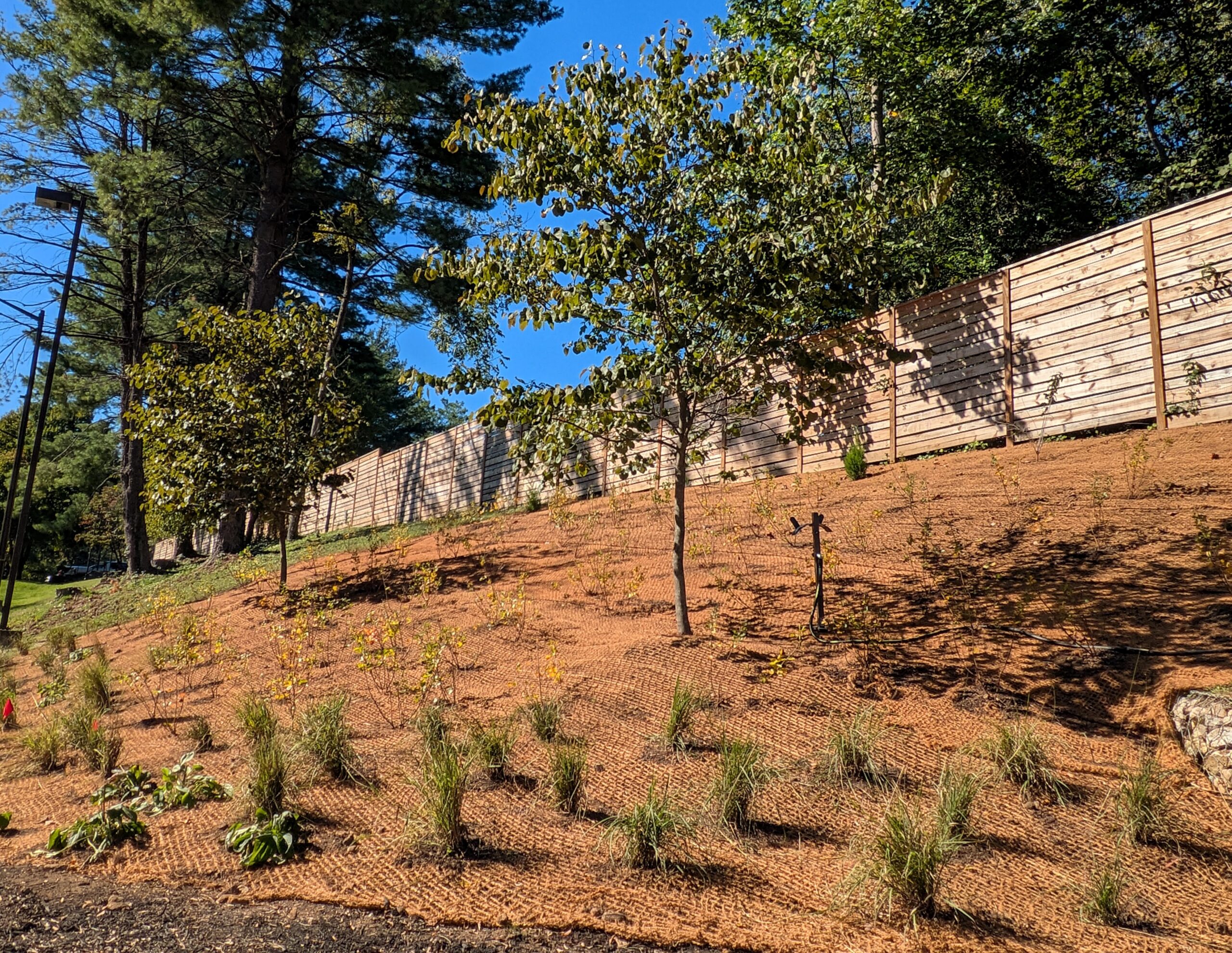
After consulting with Savage Mill on our specific situation, Howard EcoWorks designed a plan that would stabilize our steep slope, add seasonal color and structure, and be low maintenance.
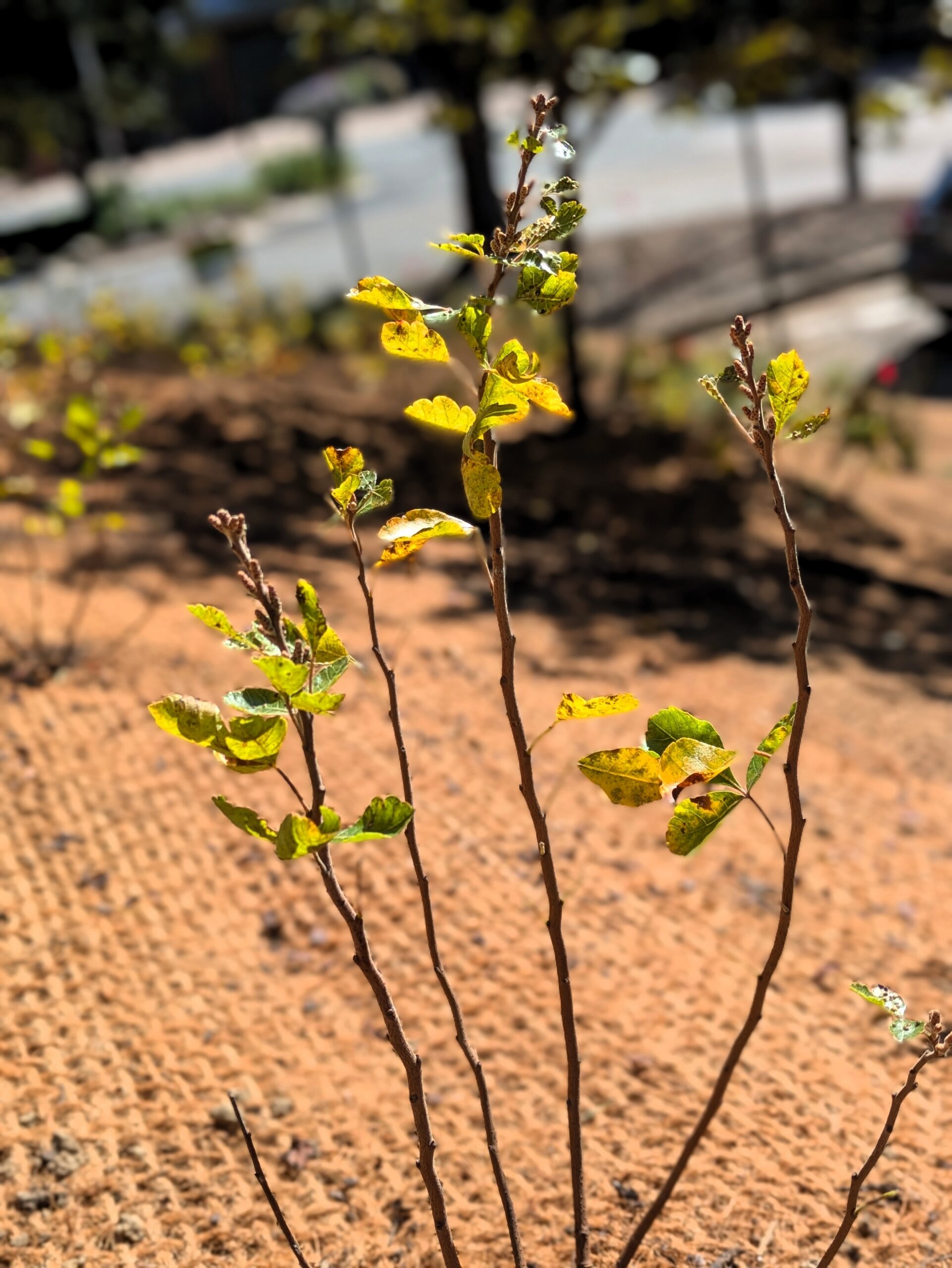
The top of the hillside in front of the wooden fence is now planted with evergreen Eastern Red Cedar and Blackhaw Viburnums. The main slope is dominated by two Eastern Redbud trees underplanted with a low woody groundcover, Gro-Low Fragrant Sumac. Both the viburnums and the sumac turn red-orange in the fall, a pleasing counterpart to the bright yellow of the Eastern Redbuds.
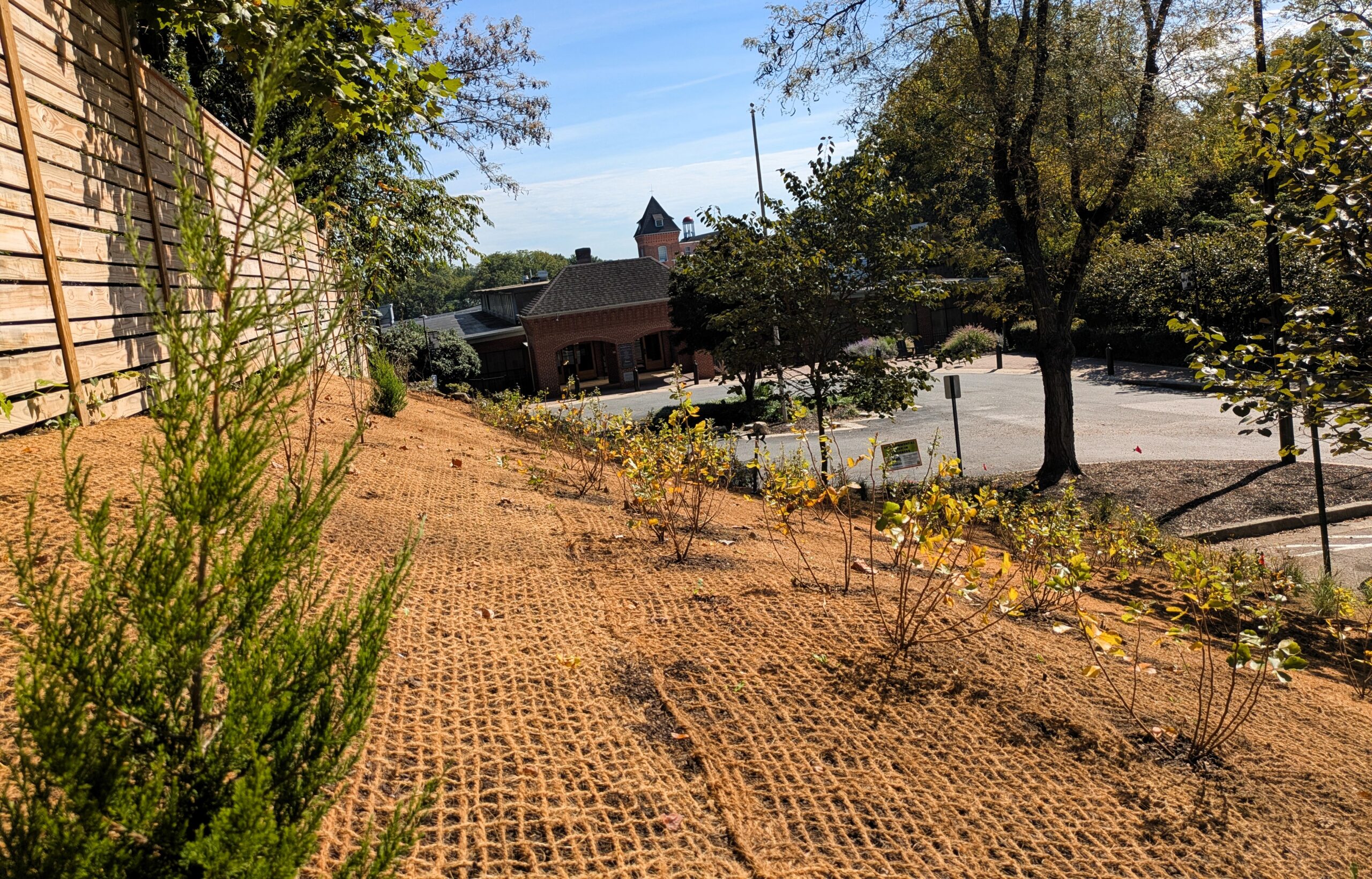
Close to the roadway, perennial grasses and flowers are planted in a serpentine design for visual interest, with additional plants being added along the traffic peninsula and gabion wall.
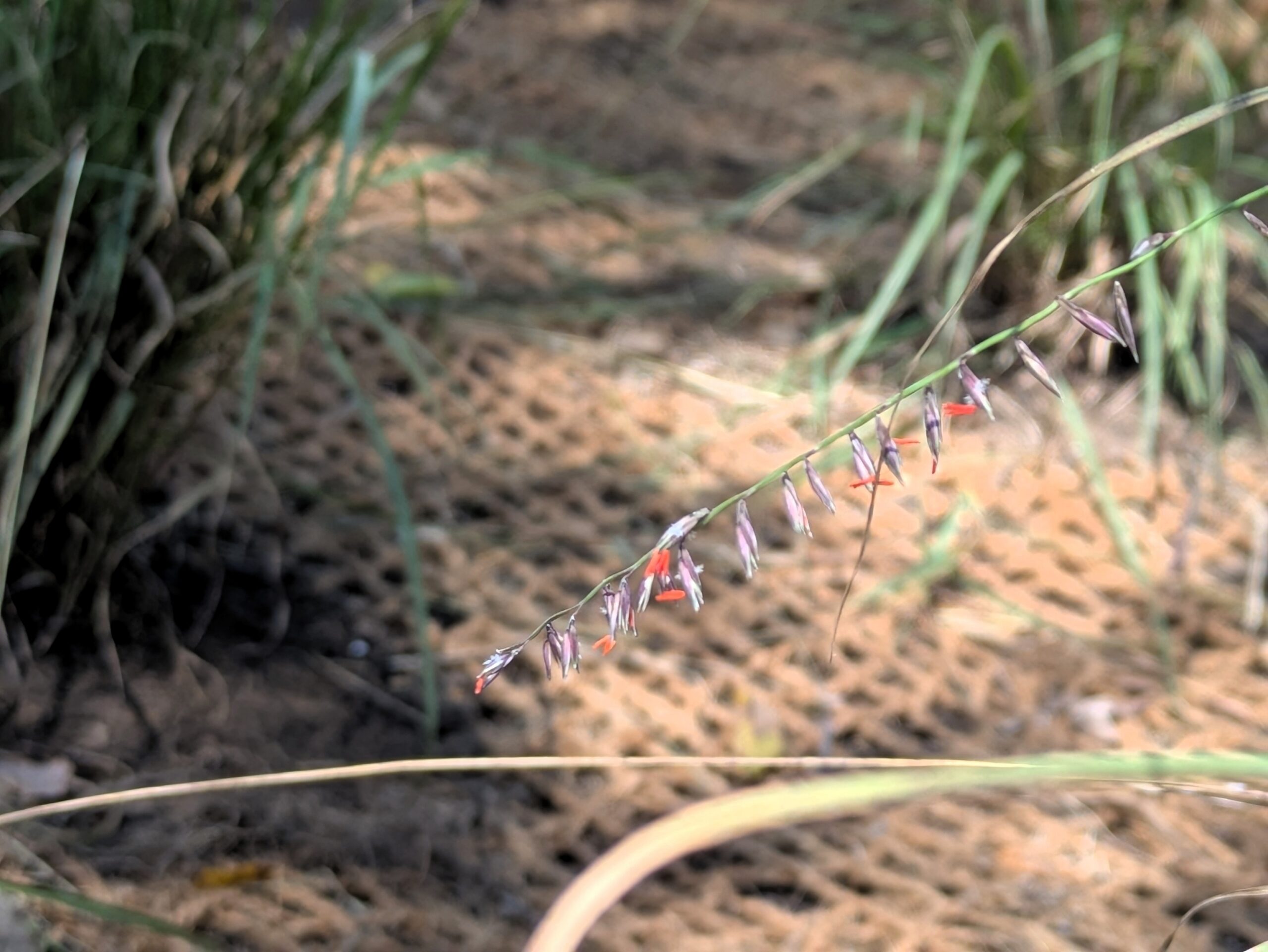
We’re already excited about next year, when we’ll begin seeing the bright red flowers of the blue-hued Sideoats Grama grass, the long-lasting bright orange blooms of the Butterfly Weed (a Monarch butterfly magnet!), and the sunny yellow Deam’s Coneflower. In coming years, as the plants get more established in their new homes, the area will fill in with a rich tapestry of color.
We look forward to welcoming our insect and bird friends as well. Honeybees will stop by to gather nectar for making honey. Monarch butterflies will pause to refuel as they migrate through between Canada and Mexico. Birds will flit down to feed on seeds as the plants mature. Numerous other insects will find haven and nourishment among these plants. We hope that our human visitors will also take some time to enjoy the beauty of this small piece of nature and come away with some ideas of small steps each of us can take to make our corner of the world better.
About Howard EcoWorks: We engage and educate the community about environmental sustainability and restoration, while creating pathways to green jobs through our workforce development programs. We design, install, and maintain attractive and resilient landscapes with plants and trees native to the local environment to enhance habitat, benefit pollinators, and local wildlife.
Additional resources in Howard County:
Lauren’s Garden Service
Howard County Bee City USA
Howard County Bird Club
Howard County’s Cleanscapes Program